
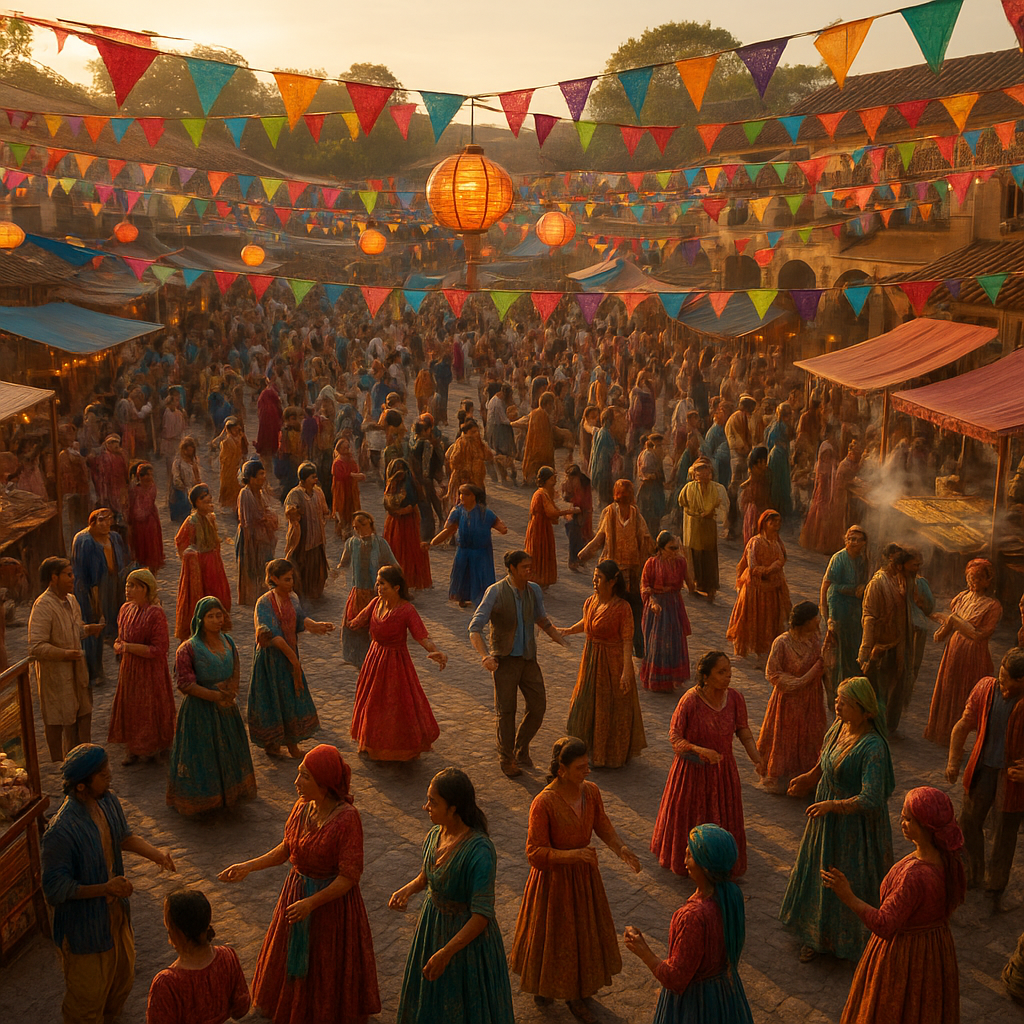
There’s something primal about a festival. The gathering of people, the shared rituals, the food that only gets made once a year — these moments do something that no museum exhibit or documentary can fully replicate. They make culture alive. And while globalization has flattened so many aspects of daily life, local festivals have proven surprisingly resilient, continuing to anchor communities to their histories, beliefs, and identities in ways that matter deeply.
From the lantern-lit streets of Hoi An during Tết to the thunderous drumming of carnival in Trinidad, festivals are far more than parties with costumes. They are living archives. They pass down traditions, reinforce social bonds, and give communities a shared vocabulary of meaning. Understanding why they endure — and why they matter — offers a fascinating window into what makes us human.
What Makes a Festival “Cultural” in the First Place?
Not every large public gathering qualifies as a cultural festival in the deepest sense. A stadium concert draws crowds, but it doesn’t typically transmit inherited knowledge across generations. What sets cultural festivals apart is their rootedness — they emerge from a community’s specific history, spiritual practices, agricultural cycles, or collective memory.
Cultural festivals can generally be grouped into a few broad categories:
- Religious and spiritual festivals — such as Diwali, Eid al-Fitr, or Semana Santa
- Harvest and seasonal celebrations — like Japan’s Obon festival or Ghana’s Homowo
- Historical commemorations — including Mexico’s Día de los Muertos or Scotland’s Up Helly Aa
- Civic and national festivals — such as Brazil’s Independence Day celebrations or India’s Republic Day parade
- Arts and performance traditions — like the Edinburgh Festival or the Orishas festivals of West Africa
Each of these categories carries different social functions, but they all share a core characteristic: they connect the present to something larger than the individual moment. They say, in effect, we were here before you, and we are still here.
Why Are Festivals Important to Cultures?
This is one of the most commonly asked questions when people start exploring cultural anthropology — and the answer is richer than it might first appear. Festivals serve multiple overlapping purposes that go well beyond entertainment.
They Transmit Knowledge Across Generations
Before widespread literacy, festivals were one of the primary ways that communities taught their histories, moral codes, and cosmologies to younger generations. In many Indigenous communities across the Americas, Africa, and the Pacific Islands, oral traditions, dances, and ceremonial practices embedded in festivals continue to serve this function today. UNESCO has recognized hundreds of these practices as part of the Intangible Cultural Heritage of Humanity — a designation that underscores just how significant they are as vehicles of knowledge.
Take the Geerewol festival of the Wodaabe people in Niger. Young men spend days adorning themselves with elaborate makeup and costumes, performing dances judged by women for charm and magnetism. It might look like a beauty pageant to an outsider, but it encodes deep values around aesthetics, social competition, and gender roles that have been refined over centuries.
They Reinforce Community Identity and Belonging
Social scientists have long noted that shared rituals create cohesion. When an entire town stops for a week to prepare for a festival — baking the same bread, hanging the same decorations, singing the same songs — it creates a powerful sense of collective identity. People who might otherwise feel isolated find themselves part of something larger.
Research published in the journal Social Psychology found that participation in communal rituals, including festivals, increases feelings of social solidarity and reduces the psychological distance between participants. This isn’t abstract theory — it’s why coming-home festivals like Homecoming in many American towns, or the Hornbill Festival in Nagaland, India, draw people back from across the world.
They Provide a Safe Space for Expression
Historically, festivals have often served as pressure valves within social hierarchies. The Roman Saturnalia, for instance, temporarily inverted social roles, allowing servants to dine with masters. Many carnival traditions across the Caribbean and Latin America grew partly from this same impulse — a structured moment of inversion, excess, and freedom that actually reinforced the social order by containing dissent within sanctioned boundaries.
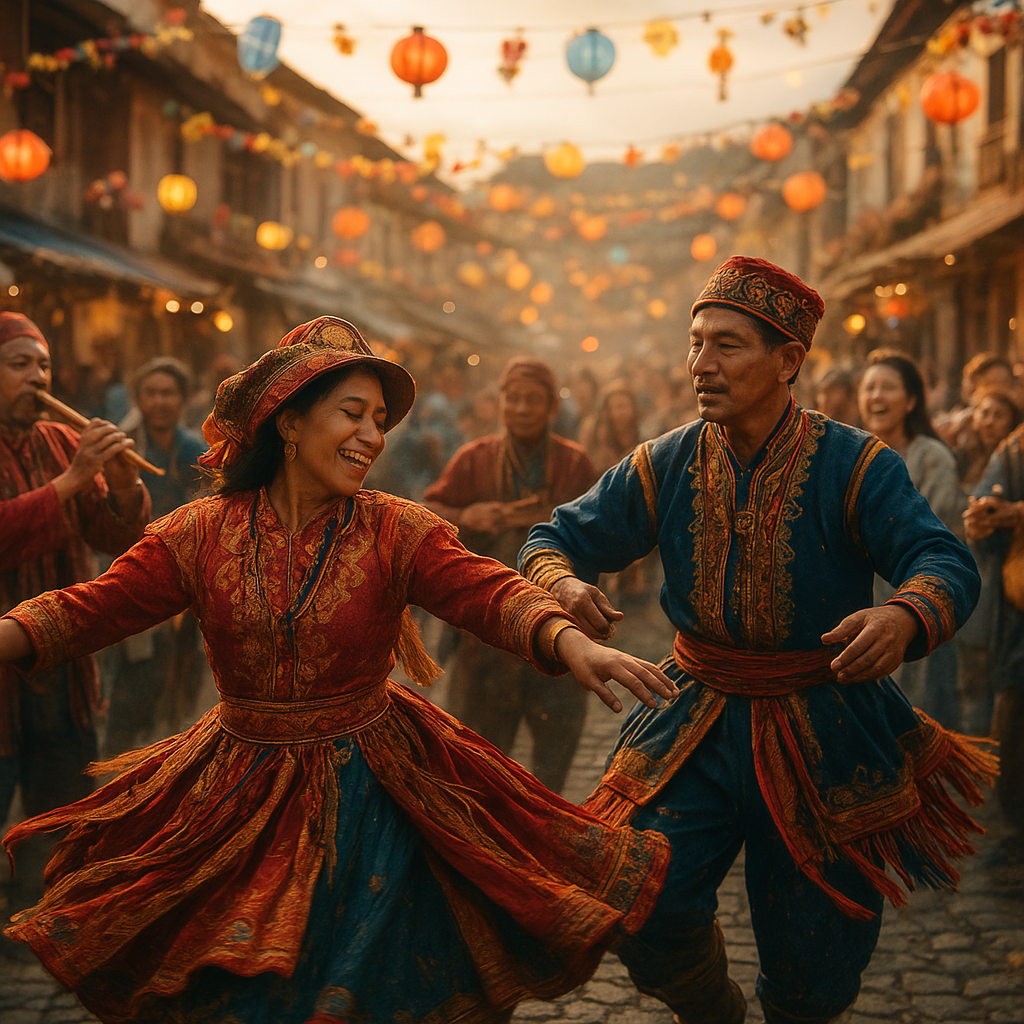
Even in contemporary settings, festivals allow communities to express aspects of their identity — ethnic pride, spiritual devotion, political memory — that might otherwise lack a visible public platform.
What Are the Cultural Significances of Traditional Festivals Worldwide?
The significance varies enormously depending on context, but several threads run consistently through traditional festivals across the globe.
Spiritual and Sacred Dimensions
In much of the world, festivals are inseparable from religion. Diwali, celebrated by over a billion Hindus, Sikhs, Jains, and some Buddhists, is not merely a festival of lights — it marks the triumph of knowledge over ignorance, light over darkness. The specific rituals, sweets, and prayers associated with Diwali differ by region and community, but the underlying spiritual architecture holds firm.
Similarly, the Japanese festival of Obon, held in mid-August, is a Buddhist observance honoring the spirits of ancestors. Families clean graves, light lanterns to guide spirits home, and perform Bon Odori dances in communal spaces. The festival is simultaneously joyful and solemn — a rare emotional combination that reflects the complexity of the relationship between the living and the dead.
Economic and Agricultural Roots
Many of the world’s oldest festivals began as agricultural celebrations. The harvest season was a matter of life and death for pre-industrial communities, and marking it with communal ritual made practical and spiritual sense. Ghana’s Homowo festival, whose name literally translates to “hooting at hunger,” commemorates a historical famine survived by the Ga people. Today it remains a deeply meaningful harvest celebration centered on family reunion and the sharing of palm nut soup.
Even as most festival-goers have long since moved away from direct agricultural dependence, these roots give the celebrations a grounded, elemental quality that purely invented holidays rarely achieve.
The Role of Art, Music, and Craft
Festivals are often the primary stage on which traditional arts survive. In Spain, the Feria de Abril in Seville showcases flamenco dancing in a context where the art form is not just performed but inhabited — worn in the form of intricate trajes de flamenca, danced in the streets and private casetas, lived rather than merely watched. Without the festival framework, many such art forms would retreat entirely into formal performance venues, losing the community ownership that keeps them vital.
The same is true of the Notting Hill Carnival in London, which began in 1966 as a celebration of Caribbean culture for the Trinidadian and Barbadian communities who had settled in the city. Decades later, it draws around two million people annually and remains one of the most important platforms for Caribbean musical and artistic traditions in Europe.
Why Are Local Festivals Important — Not Just the Big Ones?
It’s easy to focus on globally recognized festivals like Carnival in Rio, Oktoberfest in Munich, or Holi across India. But the smaller, hyperlocal festivals often carry the most concentrated cultural weight. They haven’t been polished for tourism. They haven’t been scaled up to accommodate tens of thousands of visitors. They belong, fundamentally, to the community that created them.
In a small village in Oaxaca, Mexico, a patron saint festival might involve a week of preparation, specific foods cooked from recipes passed down for generations, dances that no one outside the village would recognize, and fireworks assembled by hand by local craftspeople. The entire community participates — children learn the dances by watching older relatives, teenagers take on new ceremonial roles for the first time, elders judge whether the traditions are being properly observed.
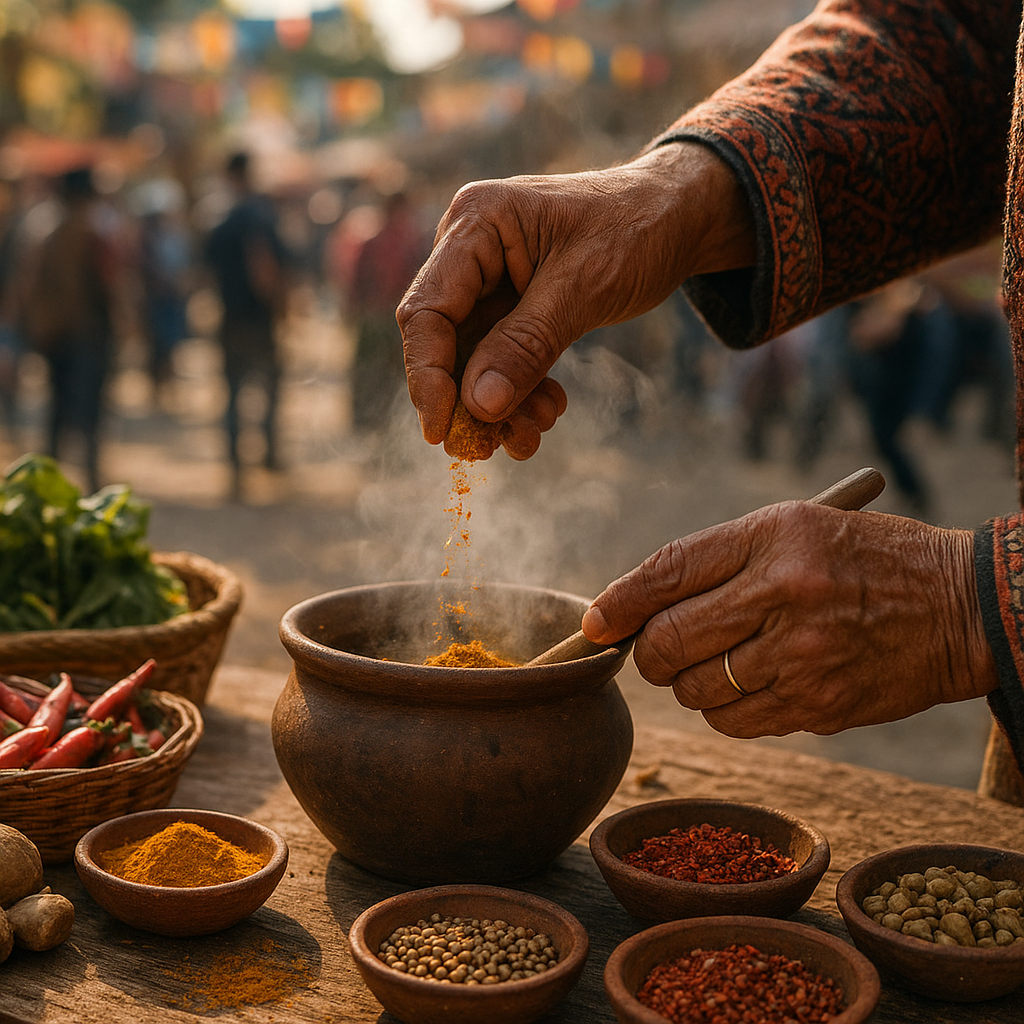
These local festivals are not tourist attractions. They are living systems of cultural reproduction. And their survival is increasingly important as homogenization threatens the diversity of human experience.
The Threat of Cultural Erosion
UNESCO estimates that a language dies every two weeks. Cultural practices, including festivals, are at similar risk. Urbanization, migration, and the dominance of mass media mean that younger generations in many communities are growing up with weaker connections to traditional practices. When a festival is no longer celebrated, it rarely disappears overnight — it fades gradually as the people who remember it get older and fewer.
This makes documentation and active community support for local festivals not just culturally interesting but genuinely urgent. Several governments and NGOs have launched programs specifically aimed at supporting traditional festival preservation, recognizing that once these practices are gone, no amount of archival footage truly brings them back.
Festivals as a Lens for Travelers
For travelers, attending a local festival — especially one that isn’t primarily designed for tourists — offers an incomparable depth of cultural understanding. Watching daily life in a place is one thing. Witnessing a community perform its deepest rituals is another entirely.
A few things are worth keeping in mind when attending festivals as an outsider:
- Do your research beforehand. Understanding the spiritual or historical context of a festival helps you engage respectfully and meaningfully.
- Ask before photographing. Many sacred or intimate moments within festivals are not meant for public documentation.
- Participate where invited. Many festivals welcome outsider participation in specific ways — accepting food, joining a dance, wearing a flower garland. These invitations are genuine offers of connection.
- Spend money locally. Buy from local vendors, attend community-organized events rather than tourist-facing versions, and support the economy that sustains the festival.
- Be present rather than performative. The goal is to witness and experience, not to collect social media content. If your travels take you to remote regions, planning where you’ll sleep matters too — knowing how to find safe and affordable accommodation can make the difference between a stressful trip and a meaningful one.
The Enduring Power of Coming Together
There is a reason that no matter how connected the digital world becomes, festivals persist. Video calls and social feeds cannot replicate the experience of standing in a crowd, hearing the same music, eating the same food, feeling the heat of the same bonfire. Human beings are social creatures with deep needs for embodied, shared experience — and festivals fulfill that need in ways nothing else quite manages.
As the anthropologist Victor Turner observed, festivals create what he called communitas — a temporary dissolution of the social hierarchies and individual identities that normally separate people. In that brief, charged space, something fundamental is affirmed: that we belong to one another, that our histories matter, and that the act of celebrating together is itself a form of meaning-making.
Final Thoughts
Local festivals are not relics of the past. They are dynamic, evolving expressions of who communities are and what they value. They transmit knowledge, build solidarity, honor the sacred, and keep art forms alive that would otherwise vanish. They remind participants — and thoughtful observers — that culture is not a fixed artifact but a living practice, renewed every time a community gathers to celebrate it.
Whether it’s a centuries-old harvest rite in a mountain village or a decades-young diaspora carnival in a major city, every festival is a declaration: this is who we are, and we are still here. That declaration, repeated generation after generation, is how cultures survive.